Key takeaways
- A flame retardant (FR) fabric does not stop burning forever; it resists ignition, slows the spread of flame and tends to self-extinguish once the source is removed.
- Non-durable FR finishes suit indoor items that are never washed, such as theatre drapes. Durable FR finishes are needed for anything exposed to rain or laundering.
- Always specify the end use, the washing or weather exposure and the test standard your buyer or authority expects before ordering FR fabric.
A spark from a cooking stove in a camp, a short circuit behind a stage curtain, a welding splash on a factory floor: fire risk in textiles is rarely dramatic until the moment it is. That is why flame retardant fabrics are now a standard requirement for tents, event structures, drapes, institutional furnishings and protective workwear. This guide explains, in plain language, how FR fabrics work, the difference between durable and non-durable treatments and how to choose the right one for your application.
What Is a Flame Retardant Fabric?
A flame retardant fabric is a textile that has been made harder to ignite and slower to burn. Ordinary cotton canvas catches fire easily and keeps burning; a treated FR cotton canvas resists ignition, chars instead of flaring, limits how far the flame travels and usually goes out on its own when the ignition source is taken away. The aim is to buy time: time for people to move out of a tent, for a stage crew to react, or for a worker to step back from a hazard.
There are two broad ways to get there:
- Treated FR fabrics: a natural or blended base cloth, such as cotton or polyester-cotton, is given a chemical finish that changes how the fibres behave in heat. Most industrial canvas and drill used in India falls in this group.
- Inherently FR fabrics: the fibre itself is flame resistant (for example aramids or modacrylics). These are specialised, costly and mainly used in high-risk protective clothing.
Our flame retardant fabrics are treated fabrics, pre-treated roll by roll for both durable and non-durable applications.
Flame Retardant vs Flame Resistant: Is There a Difference?
In everyday trade the two terms are used interchangeably. Strictly speaking, “flame resistant” often describes a fabric whose resistance is built into the fibre, while “flame retardant” describes a fabric that has been treated to behave that way. For a buyer, the more useful question is not the label but the evidence: which test has the fabric passed, after how many washes or how much weathering?
Durable vs Non-Durable FR Finishes
This is the single most important choice when specifying FR fabric, and the one buyers most often get wrong.
| Factor | Non-durable FR finish | Durable FR finish |
|---|---|---|
| How it behaves | Effective when new, but can be washed out by water | Bonded to resist rain, weathering and repeated laundering |
| Typical uses | Theatre drapes, stage backdrops, indoor display and decor fabric | Tents, outdoor covers, military covers, workwear, mattress ticking |
| Washing | Not to be washed; re-treatment may be needed after cleaning | Designed to retain performance through specified wash cycles |
| Outdoor exposure | Not suitable | Suitable; can be combined with water-repellent and UV-resistant finishes |
| Cost | Lower | Higher, but far better value where exposure is real |
A simple rule: if the fabric will ever meet rain, a washing machine or a damp store, choose a durable finish. A non-durable finish on an outdoor tent can lose much of its protection after a single monsoon.
Where Flame Retardant Fabrics Are Used
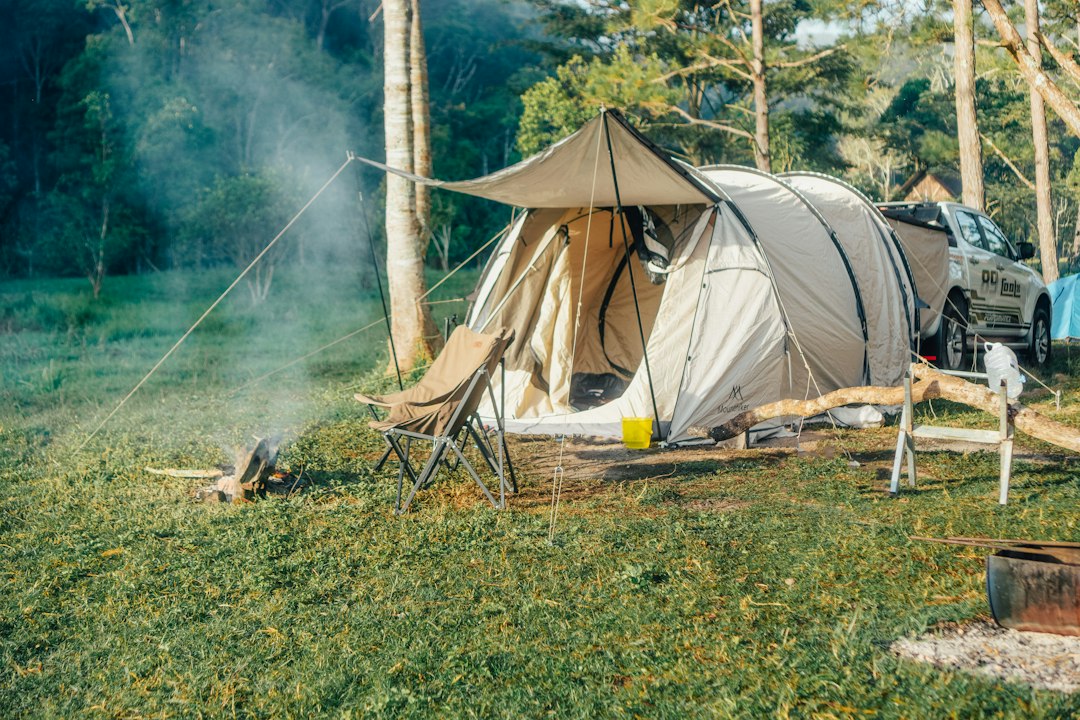
- Tents and shelters: event, wedding, camping, relief and military tents and shelters, where people sleep or gather close to lights, heaters and cooking.
- Theatre, auditoriums and venues: stage curtains, wings and drapes.
- Transport interiors: railway and aircraft curtains, where fire safety norms are strict.
- Bedding and furnishing: mattress ticking for hostels, hospitals and institutions.
- Industrial and defence: machinery and vehicle covers, godown covers and military covers.
- Protective clothing: workwear and medical fabrics for fire workers, welders, electricians and plant staff.
Which Base Fabric Should You Treat?
The finish is only as good as the cloth underneath. Common combinations include:
- Heavy cotton canvas (10 oz to 18 oz): the classic choice for FR tents and covers. Cotton takes FR chemistry well and stays breathable.
- Polyester cotton canvas: lighter and stronger for its weight, with good dimensional stability for large tent panels. The blend ratio affects how the FR treatment performs, so it should be matched carefully.
- Cotton drill (around 220 to 310 GSM): the workhorse for FR uniforms and coveralls.
- Closely woven cotton (around 170 GSM): for lighter shirts and medical garments.
Commonly supplied FR qualities include 10 oz, 12 oz, 15 oz and 18 oz plain canvas, 220, 240 and 310 GSM cotton drill, 170 GSM closely woven cotton and 240 GSM 65/35 polyester-cotton, in widths from 36 to 84 inches.
Combining FR With Other Finishes
Outdoor fabrics rarely need only one property. A tent fabric, for example, typically needs to be flame retardant, water repellent, rot-proof and UV resistant at the same time. These finishes interact with each other, so they should be engineered together at the mill rather than added one after another by different processors. Waxed proof canvas is also available in a flame-resistant tentage version for buyers who want traditional wax weatherproofing with fire safety.
How Flame Performance Is Tested
FR fabrics are usually checked with a vertical flame test: a strip of fabric is held upright, exposed to a flame for a fixed time and assessed on after-flame time, after-glow and the length of the charred area. Different industries and authorities refer to different standards, for example drapery standards for venues, tentage specifications for defence and institutional tenders, and standards such as EN ISO 11612 for heat and flame protective clothing. Because requirements vary, the safest approach is to tell your supplier exactly which standard and which pre-conditioning (washing or weathering) your buyer asks for.
Buyer’s Checklist for FR Fabric
- End use: indoor or outdoor, apparel or cover, fixed or frequently handled.
- Durability: durable or non-durable finish, and how many washes or how much exposure it must survive.
- Base cloth: fibre, weight (oz or GSM), weave (plain or RIB STOP) and width.
- Additional finishes: water repellency, rot-proofing, UV resistance, colour.
- Test evidence: the test method, the result and whether the sample was tested before or after conditioning.
- Care instructions: how the end user should clean and store the product without damaging the finish.
Caring for Flame Retardant Fabric
- Follow the supplier’s washing instructions; harsh detergents, bleach and fabric softeners can weaken many FR finishes.
- Never wash non-durable FR drapes in water; have them dry-cleaned or re-treated as advised.
- Keep FR covers and tents clean; oil, grease and dust are themselves fuel and can reduce real-world protection.
- Inspect regularly and replace fabric that is heavily worn, contaminated or past its rated life.
Frequently Asked Questions
Is flame retardant fabric fireproof?
No fabric is completely fireproof. A flame retardant fabric resists ignition, slows flame spread and usually self-extinguishes when the flame source is removed, giving people valuable time to react.
What is the difference between durable and non-durable FR fabric?
A non-durable FR finish is meant for indoor items that are not washed, such as theatre drapes, and can be removed by water. A durable FR finish is designed to survive rain and repeated laundering, so it is used for tents, outdoor covers and workwear.
Can cotton canvas be made flame retardant?
Yes. Cotton canvas takes FR treatment very well and remains breathable, which is why treated cotton and poly-cotton canvas are widely used for flame retardant tents and covers.
Which GSM is used for flame retardant workwear?
FR workwear is commonly made from cotton drill of around 240 to 310 GSM, 240 GSM polyester-cotton blends, and lighter closely woven cotton of around 170 GSM for shirts and medical garments.
Does washing reduce flame retardancy?
It can. Non-durable finishes wash out, and even durable finishes can be weakened by bleach, softeners or harsh detergents. Follow the supplier’s care instructions to keep the protection effective.
Talk to A K Industrial Fabrics
A K Industrial Fabrics Private Limited has manufactured and supplied industrial and technical fabrics since 1983, with in-house pre-treatment for water, weather and flame resistance. Browse all our fabric products, see the industries and applications we serve, or send your specification through our contact page and our team will recommend the right construction and finish.