Key takeaways
- Breathable cotton and poly-cotton canvas remain the best tent fabrics for hot and humid climates because they reduce condensation and heat build-up.
- Match the weight to the tent: about 8 to 12 oz for camping and light event tents, 12 to 18 oz for heavy-duty, relief and military tentage.
- Insist on combined finishes engineered together: water repellent, rot-proof, UV resistant and, wherever people gather or cook, flame retardant.
A tent is only as good as its fabric. The frame, ropes and pegs can be replaced cheaply; a roof that leaks, rots, fades or catches fire cannot. Whether you manufacture camping tents, rent out wedding and event structures, supply relief shelters or bid for defence tentage, this guide explains how to choose the right tent fabric.
What a Good Tent Fabric Must Do
- Keep out rain and wind without trapping moisture inside.
- Breathe, so that sweat, breath and cooking vapour can escape.
- Resist tearing at stress points such as eyelets, ridges and pole tips.
- Hold its colour under strong sun.
- Resist rot and mildew during wet seasons and storage.
- Resist flame wherever people sleep, gather or cook.
Our tent fabric is engineered around exactly these properties.
Cotton, Poly-Cotton or Synthetic?
| Fabric | Strengths | Limitations | Best for |
|---|---|---|---|
| Cotton canvas | Highly breathable, cool in summer, quiet in wind, swells when wet to tighten the weave | Heavier; needs rot-proofing; can shrink if not pre-shrunk | Bell tents, family camping, military and institutional tents, hot climates |
| Polyester cotton canvas | Lighter for the same strength, faster drying, better dimensional stability, good breathability | Slightly less breathable than pure cotton | Large event and wedding tents, relief shelters, frequently pitched tents |
| Nylon or polyester (coated) | Very light, fully waterproof when coated | Little breathability, heat build-up, condensation, UV sensitivity | Lightweight trekking tents |
In India’s heat and humidity, breathable canvas usually gives the more comfortable and longer-lasting tent. A synthetic tent can become uncomfortably hot by midday and wet inside with condensation by morning.
Choosing the Right Weight
- 8 to 10 oz: light camping tents, inner walls and partitions, light event canopies.
- 10 to 12 oz: general camping, bell tents, event side walls.
- 12 to 15 oz: heavy camping, roofs of event tents, relief and institutional tents.
- 15 to 18 oz: military tentage, long-term and extreme-weather installations, fly sheets for heavy use.
Commonly used tent qualities include 8, 10, 12, 13, 15 and 18 oz. Heavier is not always better: weight adds cost, transport effort and pitching time. Choose the lightest fabric that meets the strength and weather requirement. Our guide to reading fabric specifications explains how oz, GSM and construction relate.
Plain Weave or RIB STOP?
Plain weave canvas is the standard, giving a stable, even surface that is easy to stitch. RIB STOP adds reinforcing yarns in a grid so that small cuts do not run into large tears, which is valuable for tents pitched and struck often or used in rough terrain.
The Finishes That Make or Break a Tent
Water Repellency
A water repellent finish makes rain bead off the surface while the cloth still breathes. For heavier exposure, waxed proof canvas gives stronger water resistance.
Rot-Proofing and Anti-Bacterial Treatment
Cotton is a natural fibre, and if it is packed away damp it can develop mildew within days. Rot-proof and anti-bacterial treatment protects the fibres and is essential for tents stored between seasons.
Flame Retardancy
Event tents with lighting and generators, camps with cooking and heating, and military tentage all need flame retardant fabric with a durable finish that survives rain. Our article on durable vs non-durable FR finishes explains what to ask for.
UV Resistance and Colour Fastness
Sunlight weakens fibres and fades colours. UV-resistant finishes and good light fastness from vat or pigment dyes keep a tent strong and presentable for longer. Olive, khaki and sand shades from our dyed canvas range are popular for defence and outdoor use because they hide soiling.
Fabric by Tent Type
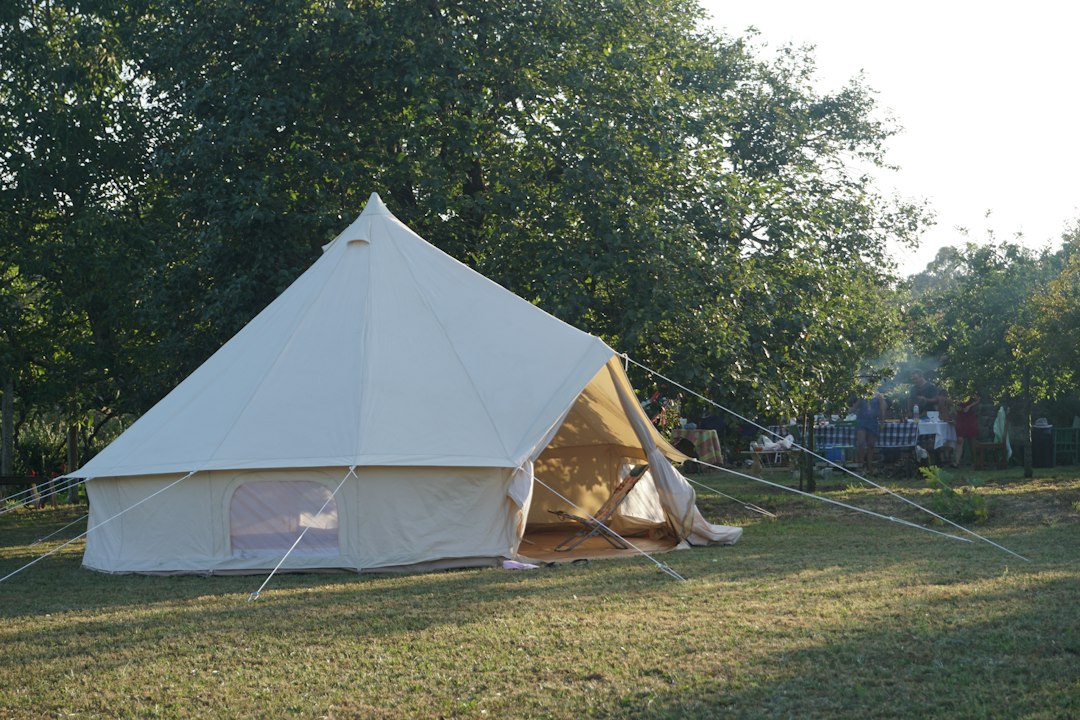
- Camping and glamping tents: 10 to 12 oz cotton or poly-cotton, water repellent, rot-proof, ideally flame retardant.
- Wedding, event and exhibition tents: poly-cotton or cotton roofs with FR treatment; lighter, dyed or white fabric for walls and linings.
- Relief and disaster shelters: poly-cotton canvas that is light enough to transport in bulk, water repellent, rot-proof and fire safe.
- Military and institutional tents: heavy cotton or poly-cotton canvas to the buyer’s specification, vat-dyed, with FR, water repellent and rot-proof finishes.
Practical Tips for Tent Makers
- Use pre-shrunk fabric, or allow for shrinkage in your patterns.
- Reinforce eyelets, corners, ridges and pole points with extra layers.
- Choose rot-resistant thread compatible with the fabric finish.
- Plan panel layouts around the fabric width to reduce seams on the roof.
- Seal or tape critical seams on roofs and fly sheets.
Caring for Canvas Tents
- “Season” a new cotton tent by pitching it and wetting it once so the threads swell and close the stitch holes.
- Never pack a tent away wet. If you must, unpack and dry it within a day.
- Brush off dry dirt; avoid detergents that strip finishes.
- Store in a dry, ventilated place, off the floor and away from rodents.
Frequently Asked Questions
Which fabric is best for tents in India?
Breathable cotton or polyester-cotton canvas with water repellent, rot-proof, UV resistant and flame retardant finishes performs best in India’s heat, humidity and monsoon.
What GSM or oz is used for tent fabric?
Camping tents typically use about 8 to 12 oz canvas (roughly 270 to 410 GSM), while heavy-duty, relief and military tents often use 12 to 18 oz (roughly 410 to 610 GSM).
Is cotton canvas better than polyester for tents?
For comfort in hot climates, yes. Cotton canvas breathes, reduces condensation and stays cooler. Coated polyester is lighter but traps heat and moisture.
Why should tent fabric be flame retardant?
People in tents often use lights, generators, stoves and heaters close to the fabric. A durable flame retardant finish slows flame spread and gives occupants time to get out safely.
How do I stop my canvas tent from getting mould?
Choose rot-proof treated fabric, never store the tent wet, dry it fully in shade after use and keep it in a dry, ventilated store.
Talk to A K Industrial Fabrics
A K Industrial Fabrics Private Limited has manufactured and supplied industrial and technical fabrics since 1983, with in-house pre-treatment for water, weather and flame resistance. Browse all our fabric products, see the industries and applications we serve, or send your specification through our contact page and our team will recommend the right construction and finish.